Move Your Body. Restore Your Flow.
The Movement Pillar of Whole-Body Alignment
When movement feels difficult—tight, painful, or exhausting—it’s often not just a physical issue. It’s a signal from the body that something is out of alignment.
Movement is not about pushing harder. It’s about restoring communication between your body and nervous system.
When movement feels safe, supported, and intentional, the body begins to release tension, rebuild strength, and return to a more natural state of ease.
Start Moving in a Way Your Body Trusts
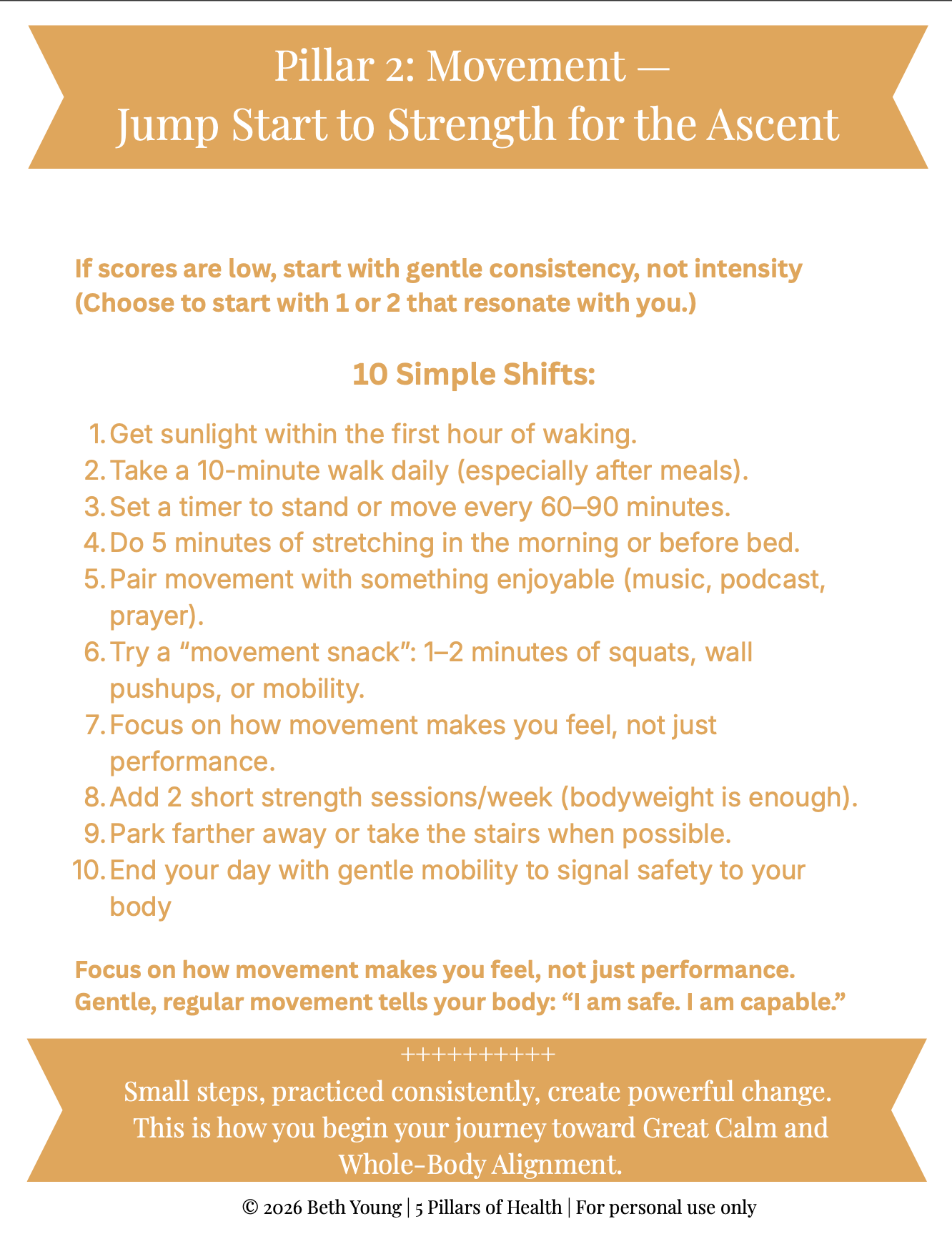
Download your free Pillar 2: Movement — Jump Start to Strength for the Ascent guide and begin with simple, gentle shifts that build strength, improve energy, and support a regulated nervous system. Start small—consistency creates lasting change.
When Movement Is Out of Alignment
Your body often communicates through sensation:
- Chronic aches or persistent tension
- Stiffness or limited range of motion
- Poor posture or physical fatigue
- Low stamina or feeling easily depleted
- Resistance or lack of motivation to move
These are not failures—they are protective responses. The body adapts when it feels overwhelmed, overworked, or disconnected.
The goal is not to force movement, but to reintroduce it in a way that feels safe and sustainable.
A Nervous System–Safe Approach to Movement
Lasting strength and mobility come from consistency, not intensity.
When movement supports the nervous system, it can:
- Reduce chronic tension and pain patterns
- Improve posture and structural alignment
- Increase energy and circulation
- Restore mobility and flexibility
- Build strength without overwhelm
Gentle, intentional movement helps shift the body out of stress and into regulation—where true healing and resilience can take place.
Movement Resources
Relieving Tension & Discomfort
Pain and tightness often come from protective patterns in the body. Slow, mindful movement helps release these patterns and restore ease.
Posture & Alignment
The way you hold your body affects your breath, energy, and overall function. Small adjustments in movement can create lasting structural support.
Building Sustainable Energy
Movement should leave you feeling more energized—not depleted. When aligned, physical activity supports steady, reliable energy throughout the day.
Strength & Flexibility Balance
The body thrives on balance. Supporting both strength and flexibility allows for greater freedom and stability in everyday movement.
Reconnecting with Your Body
Movement becomes more intuitive when you begin to listen to your body’s signals rather than override them.
Simple, Supportive Movement Throughout Your Day
Explore nutritional recipes to consider throughout your day.
Morning Activation
Gentle movement in the morning helps wake up the body, improve circulation, and set a steady tone for the day.
Midday Reset
Short movement breaks can release built-up tension, improve focus, and restore energy.
Evening Unwind
Slower, calming movements help signal safety to the nervous system and prepare the body for rest.
Discover The Great Calm
Movement as a Path to Regulation
Intentional movement does more than strengthen muscles—it creates internal safety.
As the body begins to feel safe:
- Tension softens
- Breath deepens
- Energy stabilizes
- Awareness increases
Movement becomes less about effort and more about connection.
Your body is designed to move with ease, strength, and adaptability. When given the right support, it remembers.
You don’t need to do everything at once. Start small:
- A few minutes of stretching
- A short walk
- A pause to notice your posture
These simple moments begin to rebuild trust between your body and nervous system.
Returning to Natural Movement
Begin Where You Are
There is no perfect starting point—only the one available to you right now.
Each small, consistent step helps your body feel safer, stronger, and more aligned.
This is the work of the movement pillar:
Restoring flow, rebuilding resilience, and returning your body to a state of balance and ease.